


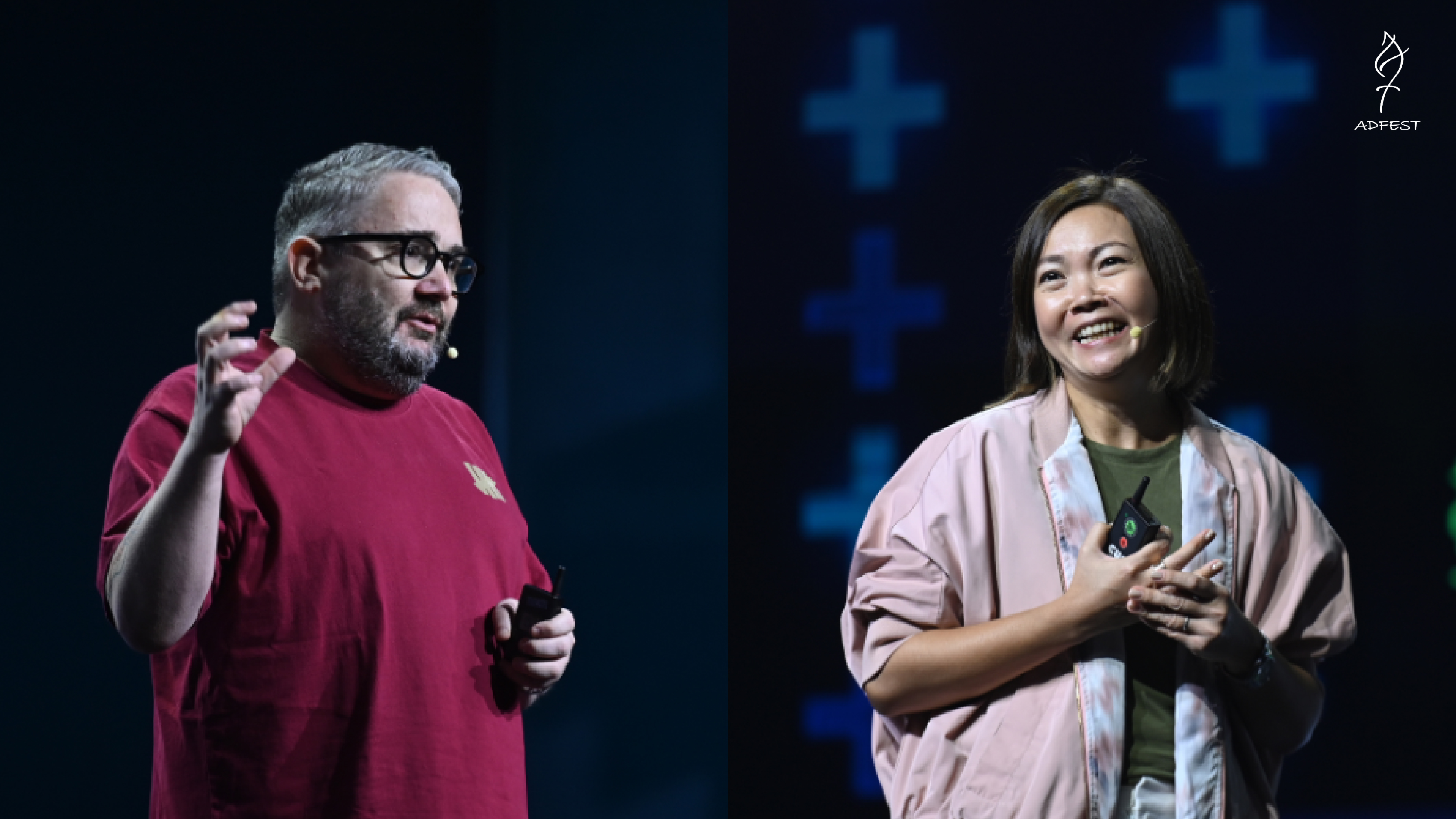
At ADFEST 2026, Stephan Schwarz, Executive Creative Director at LePub Singapore, and SJ Heng, Senior Director, Commerce at Heineken Asia-Pacific, presented “How Creativity Can Spark Real-World Connections.” The session explored how global brands can create genuine social connections across Asia-Pacific without losing local relevance. Rather than treating the region as a single market, the speakers showed how understanding local cultural tensions can help brands build experiences people genuinely want to join.
For Heineken, the objective begins with people rather than products. Freddy Heineken famously said, “I don’t sell beer. I sell good times.” That philosophy remains central to the company today through its purpose of brewing the joy of true togetherness. Although loneliness has become a global issue, it appears differently across every country. Research presented during the session showed that 68% of people still wish they had more friends who are different from themselves, while beer continues to play an important role in helping people connect socially.
SJ Heng described three ingredients in Heineken’s “recipe” that guide how the brand approaches creativity across the region:
Superior Insights: Understand the underlying human need or social tension the brand can genuinely serve.
Legendary Creativity: Build lasting creative platforms and memorable physical experiences rather than short-term campaigns.
Excellent Execution: Keep global brand values and strategy consistent while adapting execution to local cultural nuances.
They shared three local activations that demonstrated the Heineken philosophy in practice.
Trust Bars: Trust became the platform in Korea. Rather than inventing new behaviour in Korea, Heineken recognised one that already existed in abundance, trust. Seoul’s Apple Store is known for displaying untethered iPhones, reflecting a culture built on trust and mutual respect. That observation inspired Trust Bars, a self-service bar operating during UEFA Champions League matches without staff. Payment was integrated into Kakao Pay so consumers did not need to adopt new technology, and invited guests respected the system throughout the activation. What appeared extraordinary elsewhere felt completely natural to local consumers because it reflected behaviour native to them.The campaign proved how trust and openness can be seamlessly integrated into local cultural truths.
Curfew Hostels: Circumstance became an opportunity in Myanmar. Tiger Beer’s brand promise and positioning has always centered around courage and they wanted to demonstrate courage in overcoming real-world constraints. The 2025 Europa League final which featured Tottenham Hotspur and Manchester United, was the perfect opportunity for Tiger Beer to do just that since both teams were sponsored by Tiger Beer. Myanmar faced a nationwide curfew that prevented bars from opening late at night. Rather than treating the restriction as a barrier, the team found another social space, hostels. Tiger Beer transformed five hostels into safe and legal viewing venues for fans without breaking curfew laws. Tiger Beer created a high-impact, contextually relevant experience that proved courage is about helping consumers overcome barriers to enjoy life together.
Rooftop Revival: Culture itself became the media in Korea. A aerial view of Seoul reveals vast stretches of green rooftops—an affordable heat-insulation choice spanning an area three times the size of Manhattan. Rooftops have long been romanticised in Korean drama and popular culture as places where people gather. Heineken transformed these overlooked spaces by placing its signature red-star umbrellas across them and redesigning the traditional pyeongsang gathering platform with contemporary features such as Bluetooth speakers and ice boxes. Satellite imagery was even used to help people discover the locations. Rather than imposing a global campaign onto the city, the brand amplified a cultural space that already belonged to it.
Although the executions looked completely different, they followed the same discipline. A local social truth came first. Everything else, from the experience to the execution, was built around it while remaining true to Heineken’s global purpose of bringing people together.
SJ Heng closed with three practical reminders for the creative community: understand the cultural tension before developing the campaign, think beyond campaigns to experiences and platforms, and maintain strategic consistency while allowing execution to remain locally relevant. Schwarz summarised the ambition simply: the work should feel unmistakably of its country and culture, rooted in genuine social barriers and social truths.