

The next "Campaign Shoutout" goes to this year's Digital & Social Lotus Grande winner, "Vaseline Verified." The campaign for Vaseline by Ogilvy Singapore, in collaboration with Ogilvy United Kingdom, Ogilvy South Africa, and Ogilvy USA, also took home Golds in Commerce Lotus, Direct Lotus, and PR Lotus, plus a Silver in Creative Strategy. A 150-year-old jelly turning into one of the standout campaigns at ADFEST 2026 is the kind of result worth paying attention to.
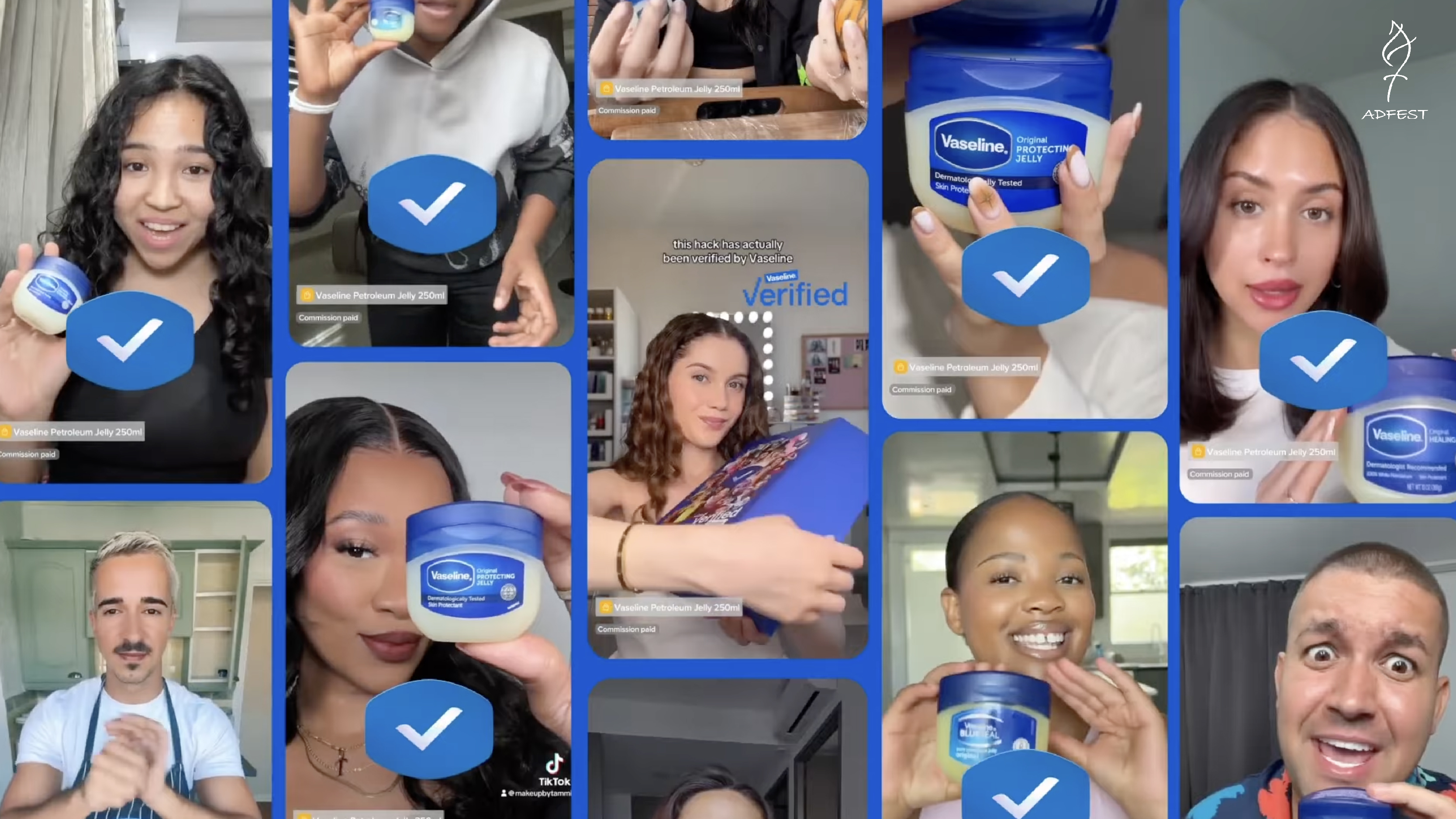
A 19th-century skin balm went viral on TikTok. Vaseline was sitting at 3.5 million user-generated "hacks" floating around social, mostly without the brand's involvement. People were using it for slugging, for shoe shine, for sealing split ends, for taming flyaway hairs before a red-carpet flash. They were also, somewhere in that pile, claiming you could eat it for an inner glow. Nobody was checking which was which.
That's the situation Ogilvy walked into.
The two obvious paths were both bad. Stay quiet and a heritage brand quietly endorses people eating petroleum jelly. Run a corporate PSA and instantly become the out-of-touch parent crashing a party that was actually working fine without them. Either way the brand loses something it can't get back — relevance on one side, trust on the other.
So Ogilvy picked a third path. They didn't try to take the conversation back. They built a lab inside it.
Vaseline Verified is a Social R&D ecosystem where the brand's actual scientists test viral hacks and either Verify them or debunk them. The Verified icon looks deliberately like a social blue tick, which is the whole point — it puts the brand's scientific legacy into a unit of cultural currency the audience already recognises. The hack itself stays in the wild. The community keeps owning the conversation. The brand just hands out the marker that says this one's safe, this one isn't.
That's a small shift in posture and a massive shift in what the brand actually is. Vaseline stops being a broadcaster and becomes a referee. The thing it owns isn't the message anymore. It's science.
Ogilvy's named insight — "credibility is crowdsourced" — has been kicking around marketing strategy for a while. What Vaseline Verified actually figured out is the follow-up question nobody had quite answered: if the community is busy generating its own credibility, what does a heritage brand still have that's useful to add? The answer Vaseline landed on is the one thing creators can't produce themselves. A lab.
This is also what made the campaign safer than it looks. Handing creative control to the community feels brave on paper, scary in legal review. But the messaging was already out of Ogilvy's hands. 3.5 million hacks had seen to that. What Vaseline Verified did was stop trying to win back something that was already gone, and start investing in the one thing creators couldn't produce themselves: scientific validation.
The commercial payoff is where this gets interesting for anyone working on a heritage brand. By Verifying hacks instead of pushing core uses, Vaseline started showing up in shopping baskets it had nothing to do with a year ago. The haircare aisle. The antihistamine section. The foot-care wall at Decathlon. None of those are skin healing. All of them are now Vaseline-adjacent because a Verified creator made the connection and the brand backed the science behind it.
The reported results back that up. Ogilvy's case submission cites a 13.9% retail sales value growth in the UK over a one-month window, a 43% lift in e-commerce sales, and a brand record of 63.3 million total interactions. Madonna posted Vaseline on TikTok without being asked. The categories Vaseline started selling into weren't won through campaign spend. They were won by saying yes to where the community had already taken the product.
And somewhere in that ecosystem, a creator who'd posted a Vaseline hack got a note back from one of Vaseline's scientists telling them the hack checked out. Or not.
Stay tuned for more Campaign Shoutouts from ADFEST!