Why judgement, not speed, will define the next generation of creatives
At ADFEST 2026, one workshop cut through the noise of AI, automation, and infinite content with a simple but powerful idea. In today’s creative landscape, the real differentiator is no longer how fast you can make something. It is how well you can judge it.
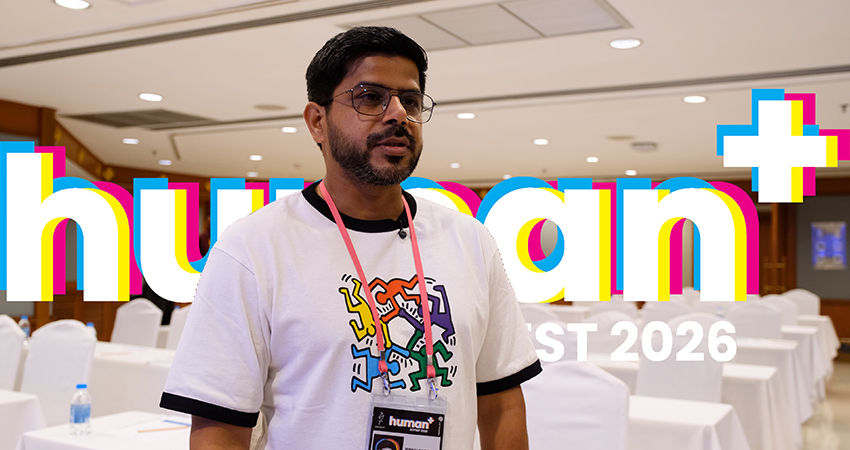
Led by Vishal Sagar, Director of Brand, Creative Strategy and Social at Pocket FM, Build Your Creative Taste: Judgement Masterclass for the Human+ Era explored what separates good work from great work in a world where ideas can be generated instantly.
The answer is taste. Not personal preference, but creative judgement. The ability to recognize quality, originality, and resonance, even when it does not align with what you personally like. As Sagar explained, preference asks, do I like it? Taste asks, is it good?
That distinction matters more than ever. With AI tools producing endless variations of ideas, the challenge is no longer creation. It is selection. Choosing what deserves to be made, refined, and shared. So how do you build that kind of judgement? The session broke it down into three core components.
The first is pattern recognition. Humans are naturally drawn to patterns because they feel familiar and satisfying. In creative work, patterns form the underlying structure of an idea. They are the principles behind why something works. Think of storytelling arcs, visual composition, or even classic rules like the rule of thirds. When you start recognizing these patterns, you begin to understand not just what works, but why it works.
The second is cultural awareness. Creativity does not exist in a vacuum. It reflects the world around it. Understanding social norms, emerging trends, shifting stereotypes, and even taboos helps you assess whether a piece of work is relevant or out of touch. Why does a story center on a certain character? What conversations is it tapping into? Why might it resonate in one market but fall flat in another? These questions sharpen your ability to evaluate work beyond its surface.
The third is judgement itself. The ability to decide what to keep, what to remove, and what to improve. According to Sagar, strong creative judgement can be tested through five lenses: clarity, originality, tension, cultural relevance, and longevity. Does the idea land clearly? Is it fresh or derivative? Does it create tension or feel too safe? Is it relevant to its audience? And perhaps most importantly, will it still hold value years from now?
But developing taste is not just about what to look for. It is also about what to avoid. The workshop highlighted five common biases that can distort creative judgement.
Novelty bias makes us overvalue something simply because it is new, or dismiss it too quickly because it feels unfamiliar. Approval bias pushes us toward safer ideas that are easier to get signed off, rather than those that are truly strong. Familiarity bias confuses comfort with quality, limiting the potential to push boundaries. Authority bias leads us to accept work as good simply because it is associated with a respected name or award. And effort bias makes us believe that something must be valuable because of the time or resources invested in it.
Recognizing these biases is essential. Because without that awareness, even the most experienced creatives can make poor decisions. So how do you build better taste?
The advice was refreshingly practical. Consume widely and intentionally. Go beyond your usual preferences. Expose yourself to different styles, cultures, and disciplines. Every piece of creative work you encounter becomes part of your internal reference library. Over time, this shapes your instinct.
In an era of infinite output, the ability to curate, refine, and judge ideas is what will set great creatives apart.
In the video below, Vishal Sagar, answers the question, “What do you do when creativity just won’t flow?”