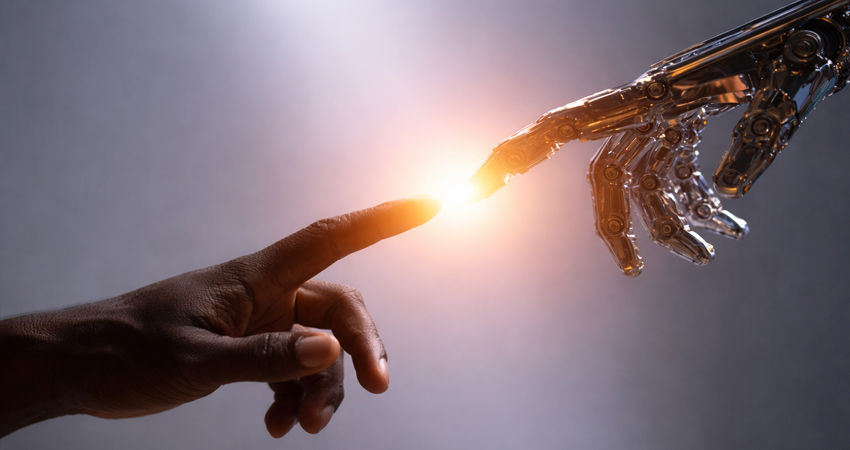
The future of advertising creativity is still deeply human. In a nutshell, this is the prevailing view you will hear from Asia’s creative leaders in ADFEST’s jury rooms.
AI is no longer a looming question. It is already here, embedded in workflows, reshaping production, and accelerating output at a pace the industry has never seen before. But if there is one consensus among this year’s jurors, it is this: AI may be transforming how work is made, but not why it matters. Across disciplines, from film craft to strategy, digital, and design, creative leaders are drawing a firm line between AI as a tool and creativity as a human act.
AI as Acceleration, Not Replacement
For many, AI’s most immediate impact is speed. What once took weeks can now be done in hours, sometimes minutes. From research and production to iteration and execution, the efficiency gains are undeniable.
As Ajay Vikram, Chief Creative Officer of Publicis Groupe Southeast Asia and President Juror across multiple categories, puts it, AI is “an amazing tool” that allows humans to do things “at a speed we never thought possible, with a quality we never imagined.”
Thanh Dao of Jung von Matt NERD echoes this from a practical standpoint. AI is already reshaping “efficiency, effectiveness, communication with customers, project management, and faster development.” In industries like gaming and digital campaigns, the ability to move faster is no longer a competitive advantage: it is a baseline expectation.
But speed, as several jurors point out, also creates a paradox.
When everything becomes easier to produce, the value of what is produced becomes harder to define.
The Creativity Crisis or Creative Reset?
With AI lowering the barrier to execution, the industry is now flooded with content that is technically competent, visually polished, and instantly scalable.
That, says Tin Sanchez of Publicis Manila, is exactly why originality matters more than ever.
“When AI makes things faster and more commonplace, you start to question how creativity will thrive,” he notes. “But that’s the challenge, to go back to being original and fresh.”
In other words, AI is not diluting creativity. It is exposing it.
The more uniform and optimized content becomes, the more audiences crave the opposite: distinctiveness, imperfection, and authenticity. The polished aesthetic that once defined excellence is no longer enough to stand out.
This shift is already influencing how juries evaluate work. Across categories at ADFEST, the question is no longer just how well something is made, but whether it makes you feel anything at all.
The Line Between Human and Machine
If there is one area where jurors are unequivocal, it is ideation.
Shruthi Subramaniam of BBDO India puts it bluntly: “HI (human intelligence) is always better than AI for ideation.”
The concern is not about AI replacing jobs: it is about it replacing thinking. When young creatives default to AI before engaging their own ideas, the risk is not inefficiency, but creative stagnation.
“AI doesn’t have empathy or sympathy,” she says. “It cannot put itself in other people’s shoes.”
This sentiment is echoed across the board. Whether in Bangkok, Mumbai, Manila, or Shanghai, jurors consistently point to empathy as the defining advantage of human creativity.
Pannarai Juanroong of Ogilvy Bangkok highlights that while AI is useful for data and efficiency, “creative work is about connecting with humans,” and that requires something instinctive, something felt.
“It’s the gut feeling,” she says. “You get goosebumps. That’s how you know an idea works.”
That emotional barometer remains something AI has yet to replicate.
AI as Collaborator, Not Competitor
Despite these concerns, the tone among jurors is not defensive. It is adaptive.
Ajay Vikram reframes the conversation entirely: “It’s not humans versus AI. It’s humans plus AI.”
In this view, AI is not a threat but a collaborator: a system that reflects what you input, amplifies your thinking, and extends your capabilities. The creative process becomes less about replacement and more about augmentation.
Vikash Chem Jong of Cheil India describes it as a multiplier effect. When human emotion and lived experience combine with AI’s capabilities, “there are more ways to create magic.”
This hybrid model is already becoming the industry norm. AI handles the scale, the repetition, the data-heavy lifting. Humans bring context, culture, and meaning.
The result is not a diminished role for creatives, but a more focused one.
The Ethics Question
With power, however, comes responsibility.
As AI becomes more embedded in creative work, questions around ethics, authorship, and boundaries are becoming harder to ignore. Ajay Vikram acknowledges this tension, noting that there is “a delicate balance where AI starts to infringe on individual freedom and rights.”
In the absence of clear global standards, many creatives are turning inward to instinct, culture, and conscience, as their guiding frameworks.
“If you feel in your bones that something is not right,” he says, “then it’s probably wrong.”
This instinctive approach reflects a broader truth about the industry: while tools evolve, values remain deeply human.
Craft, Soul, and the Irreplaceable Human Element
Perhaps the most poetic perspective comes from Yimeng Zhang of HAMLET China, who frames the conversation not in terms of technology, but of soul.
“AI can create a piece of film in minutes,” she says. “But it is just mimicking what only humans can create.”
For her, and for many others, the essence of creativity lies in something intangible- vision, authorship, emotional depth. These are not outputs that can be generated on command.
“They don’t have a soul,” she adds. “And a good piece of work should.”
This idea of “soul” surfaced repeatedly across jury discussions. Whether in film, design, or strategy, the most awarded work is not necessarily the most technically advanced, but the most human.
Asia’s Creative Edge in the Age of AI
If AI is leveling the playing field globally, Asia’s creative strength may lie in something far less replicable: cultural richness.
ADFEST jurors consistently point to the region’s diversity, emotional depth, and community-driven storytelling as its defining advantage. In a world where AI can generate infinite variations of content, these cultural nuances become even more valuable.
Asia, as Ajay Vikram describes it, is “a tapestry of different voices.” That plurality of perspectives - shaped by language, tradition, humor, and lived experience - cannot be easily codified into datasets.
And that may be the region’s greatest asset moving forward.
The Future: Faster, Smarter, More Human
The rise of AI is not the end of creativity. If anything, it is forcing the industry to return to its core principles.
What makes an idea original?
What makes a story resonate?
What makes someone feel something?
These are questions no algorithm can fully answer.
As the tools become more powerful, the expectation for meaning becomes higher. Efficiency is no longer impressive on its own. Craft must be intentional. Ideas must be distinctive. Stories must be human.
In the end, AI may change how advertising is made but it is not changing what makes it matter.
And in that space, the human voice remains not just relevant, but essential.