


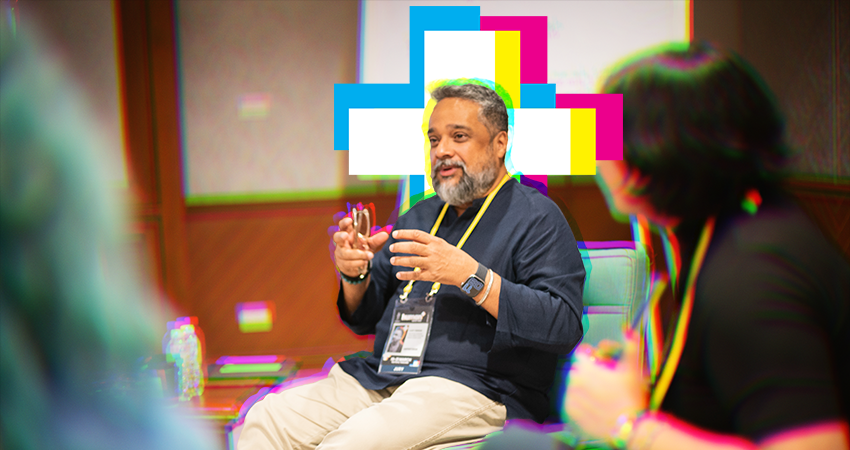
ADFEST has collected seven jury panels made up of
the greatest minds in the industry throughout the world. It would be a shame if
you didn’t get to hear their views. Here are the ideas and insights from Day 1
of judging led by a pitchy comment from Ajay Vikram about ADFEST’s theme,
Human+:
“What it can do better than
us, let AI do it. But we have to continue to be better at the other things we
really want to do.”
Ajay
Vikram, CCO, Publicis Groupe,
SEA. President
Juror for Film Lotus, Press Lotus and Radio &
Audio Lotus
Asian advertising has become
something that all
eyes in the world are on, especially from an economic perspective as well. Much
innovation has happened in the region, and we are jumping into some
cutting-edge technologies. Other parts of the world have slowly evolved,
whereas for some Asian markets it has become a revolution. I think advertising
and creativity have been keeping pace with that. The eyes of the world are not
only on Asian brands and products, but also on Asian creativity along with
them. It’s also a great responsibility we have as creatives, and for creativity
in Asia, to make sure that the voice of Asia is heard. And I truly hope that we
continue driving innovation.
Asia is a big word. Each
country is unique and
different, and it is what makes Asia such a diverse and incredibly creative
part of the world. For me, the essential part of creativity is having different
voices and different perspectives. That’s what creativity is, right? When we
look at something, we see it differently in our minds, act differently, or even
behave differently in response to the same set of human stimuli. That’s what
creativity is all about: a fresh way of looking at things. It’s the diversity
and the different voices, which I hope we never lose, that make Asia unique.
There are things that we should have in common, but it’s actually the
differences that make us rich, not just our commonality. Yes, having common
values is important, but we should never lose sight of the fact that we are
different colours of threads in the same tapestry.
AI is an amazing tool. Human
beings can do things
we never thought we could do before, at a speed we never thought possible, with
a quality we never imagined before. So AI is going to revolutionise how we are
able to express ourselves and how we communicate. It’s wonderful that we have a
tool like this. In some areas, AI can do things better than we do, but I don’t
think we should worry about that. What it can do better than us, let AI do it.
But we have to continue to be better at the other things we really want to do.
When you run, you have someone who keeps pace with you, so AI pushes you to run
a little faster. I think it will push us to the next level.
I don’t see AI and humans as
two different things,
but rather human beings plus AI, human intelligence matched with AI to produce
things. It’s a partnership. In some ways it’s like talking to another version
of yourself, because AI is a product of what you feed into it. It’s a
collaborator, someone who can create with you. I can’t predict anything because
things are moving very quickly, but at the moment, the combination of human
intelligence and artificial intelligence produces an output that humans want
and desire.
[In terms of
appropriateness] It’s tricky. There’s
always a delicate balance where AI starts to infringe on an individual’s
freedom and rights. We have to go by our human instinct about the most ethical
way to use AI. If you feel in your bones that something is not right, then it’s
probably wrong. Let our conscience, our culture, and our society be the guides
for how far we can go with AI.
[On importance of awards] It’s more important now than ever, I think. It’s one way to celebrate creativity. People might have different opinions about awards and so on, about who’s more creative than whom, and which networks win. Those are just byproducts of what we do.
I feel that creative award shows are more important than ever because creativity is facing one of its biggest challenges in recent times. It’s not just the AI conversation, but also the consolidation of holding companies in the market that makes people question the value of creativity. We all know that creativity is the most important thing. It is going to flourish simply because, at the end of the day, it’s the way humans relate to humans.
If we truly use award shows as an opportunity to showcase the best of our creative work, our abilities, and our thinking, the world will take note of what creativity continues to do, not just what it can do. I hope more works are being entered into more creative awards, because as an industry and as a community, it’s not just about the networks or the agencies we represent. Creative award shows put a spotlight on that. Each one of us needs to do our bit, because if we don’t celebrate the power of creativity, who will?
Here’s a quick overview from Brand Experience
Lotus, Commerce Lotus & Direct Lotus Jury President, Jim Ingram, Group
Chief Creative at Thinkerbell:
Tin
Sanchez
Executive Creative
Director, Publicis Manila,
Manila
Juror for Brand
Experience Lotus, Commerce Lotus,
Direct Lotus
Around 20 years ago, I was
still a young creative,
and now I’m a juror. The room where we’re judging now looks very similar to the
one we were in when I was a young creative being briefed and coached. That was
quite memorable and very foundational, so it’s really good to be back. I love
the care we’re putting into the judging and how we’re discussing the works.
We’re being very critical at times, but also generous, because we know that
everybody is hoping for the best. Our careers are at stake. But we take our
responsibilities seriously as a jury, so we’re really discussing the works and
calling things in when we have to.
[On working with digital natives in the modern age of advertising] It changes a lot. Social media is predominating our experiences. Brands want scale immediately in a shorter amount of time, and it kind of reshapes how we produce and create works, and how we think about creative work. Before, it was a lot easier to break through the clutter and everybody was aware of what it was all about.
Right now, scale is also important. Impact is also important. It’s a lot harder to achieve because you’re now talking about global audiences. The competition is tougher, so it changes how you think about the work. And with AI making things really fast and many things more commonplace, you start to question how creativity will thrive in that environment.
But I’m an optimist in that area, and I still feel that we should consider that as a challenge to go back to being original and being fresh, because that has always been what matters in creativity.
[AI and creativity] Brands always want you to trendjack. But the more something happens, the more there is a need for the opposite. That is the opposite of trendjacking: being distinctive and different. For example, the more we see polished, perfect images, the more our eyes will crave authenticity. And that’s not trendjacking.
We still need to go to that zone to be distinctive, no matter what the trends are. Look for the space that sets a new trend. And it takes the same muscle that we would use before, which is to put boundaries and to question something. I don’t think that will ever go away, no matter what happens in the midst of AI.
[Uniqueness of Asian creativity] We are a very
community-driven region of the globe. You can see it in the work that we value.
We’re not just about becoming more individual. We like to serve our community,
so you can see that reflected in the types of ideas where we’re trying to solve
problems, whether for causes or even for brands. There is a sense of
family-orientedness that is unique to this region.
Below are two snippets of insight from juror, Mark Carbone, Creative Director at Bear Meets Eagle on Fire, Sydney:
Shruthi
Subramaniam
Executive Creative
Director, BBDO India, Mumbai
Juror for Film Lotus,
Outdoor Lotus, Press Lotus,
Radio & Audio Lotus
This is my first ADFEST as a
jury member. It’s really
exciting to meet creative people from the region and see how they react to the
same idea. It’s very interesting in the jury room. You might see something from
your lens, your cultural perspective, while people from other parts of the
world have a completely different lens. And it’s such a lovely learning
experience because you learn so much about other cultures, Korean for me, for
example. So it’s not just about creativity and celebrating creativity, but also
about learning. So much learning.
Asians are very emotional
people. If you compare
our advertising to Europe or America, it’s very different. And I think emotion
is the core of many of our ideas, whether it’s humor or heartbreak. Thai humor,
for example, is known for how funny and quirky it is. Asia is full of emotion.
We should stay true to our unique local traits, because in the end we have to
be relevant to the audience back in our own countries.
I’m a writer. When I see young writers open ChatGPT to write a headline, it really hurts me. Because we’ve been trained by creative directors to do the work ourselves. I was once made to stay in the office until 4:00 AM just to create headlines. But that’s how you develop craft.
I see a lot of young creatives open AI first before actually using their own minds, and I feel that HI is always better than AI for ideation. The starting point of creation should be purely human. AI can come in later, where it gives you references, helps improvise your work, or does research. But for creatives, it should be your mind first, and then AI.
I think we should think of AI as assistance and not let it lead us. AI doesn’t have empathy or sympathy. It cannot put itself in other people’s shoes, but we can. It doesn’t have the quirkiness that makes human creativity unique.
[The quality you look for as a juror] Freshness is one important thing. Uniqueness as well. We’re living in a world now with AI where you’ve seen so many things in different forms. But does it make you feel something? Does it touch you? And that’s what’s important.